
A metal building doesn’t have to look industrial or bland. Two-tone color schemes are transforming how homeowners and builders approach metal structures, turning simple utility buildings into architectural assets that complement any property. Whether you’re painting a garage, workshop, barn, or storage facility, the right two-tone combination creates visual interest, improves curb appeal, and even helps define different functional zones. This guide walks you through proven color pairings, modern trends, and the practical considerations you need to make an informed choice for your metal building.
Table of Contents
ToggleKey Takeaways
- Two-tone metal building color schemes break monotony on large flat surfaces and create visual depth while softening the industrial appearance of metal structures.
- White and dark gray is the most versatile and universally flattering two-tone pairing, with white reflecting heat and dark gray providing structural definition.
- Modern two-tone color schemes like charcoal with sage green or navy with cream offer contemporary appeal while maintaining balance between muted and bold tones.
- Professional metal building painting requires metal-rated coatings (not standard house paint), thorough surface prep, and spray application, costing $2,000–$4,500 for a typical 40×60 structure.
- Always request paint samples and test colors in full sunlight before committing, as lighting conditions and surrounding landscaping significantly affect how colors appear on metal buildings.
- Check local zoning and HOA restrictions before painting, and plan annual cleaning to extend the lifespan of your two-tone color scheme.
Why Two-Tone Colors Work for Metal Buildings
Metal buildings have clean lines and large, flat surfaces, a blank canvas that actually benefits from a two-tone approach. A single color can feel monotonous across the roof and walls of a 40 × 60 structure: a second color breaks that monotony and creates depth. Two-tone designs also serve a practical purpose: you can emphasize or downplay certain architectural features by choosing where the color shift occurs.
The contrast between two colors helps a building integrate better into residential neighborhoods. It softens the utilitarian appearance that all-metal structures sometimes project. Also, lighter colors on the roof can reduce heat absorption, while darker accent colors on trim or lower sections add visual weight without absorbing excess solar radiation on the main roof surface.
Color also communicates function. A contractor’s shop might use bold contrasts to stand out, while a barn benefits from earth-tone combinations that blend with the landscape. Two-tone schemes give you flexibility to balance aesthetics with property context, zoning expectations, and personal preference.
Classic Two-Tone Metal Building Combinations
White and Dark Gray Pairing
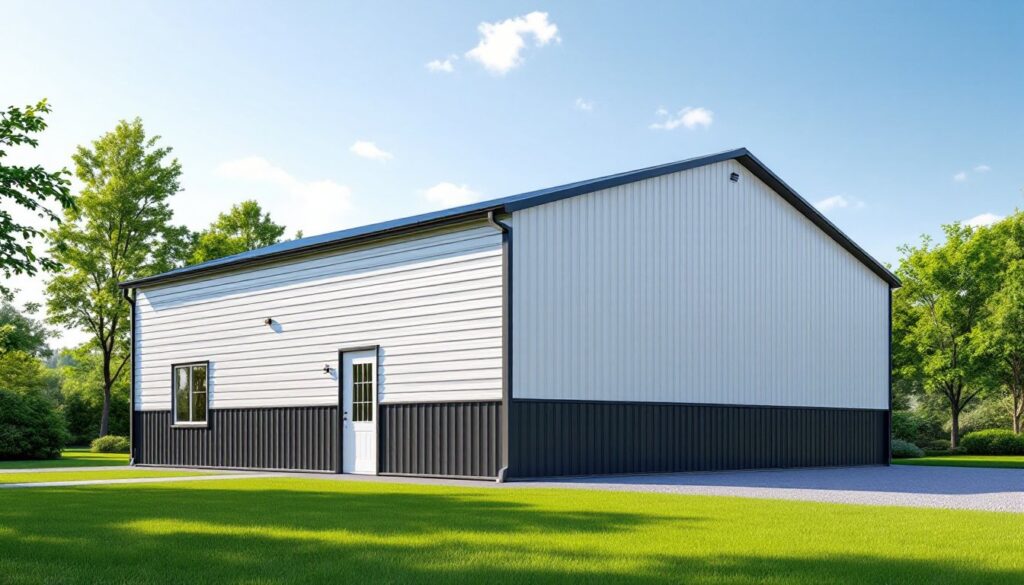
White and dark gray is the safest, most universally flattering two-tone choice. White panels on the main roof and upper walls, paired with dark gray (charcoal or gunmetal) on the trim, lower sections, or accent panels, creates a clean, modern look that doesn’t feel trendy or dated. White reflects sunlight and keeps interior temperatures lower, while dark gray provides enough contrast to define the building’s edges and structure.
This combination works in any setting: suburban residential yards, rural properties, or commercial zones. It’s also forgiving, paint color samples from different manufacturers vary slightly, so a neutral gray pairs well with whites across price points and brands. The white can be a standard bright white or a softer off-white or ivory to reduce harsh glare and appear less institutional.
Black and Tan Contrast
Black metal paired with tan, buff, or light khaki creates striking visual interest while remaining sophisticated. Black absorbs heat, so reserve it for trim, lower panels, or accent areas rather than the entire roof. Tan or buff tones are earthy and recessive, so they work well on the main roof and walls without overwhelming the landscape.
This pairing works particularly well for barns, agricultural buildings, or properties in rural settings. The contrast echoes traditional barn aesthetics while feeling contemporary. It’s bolder than white-and-gray but still professional. Be aware that pure black can fade noticeably under intense sun over 10+ years, so choose high-quality metal roofing coatings rated for UV durability if black is your accent color. Materials from established metal roofing suppliers typically include 20-year fade warranties.
Modern and Contemporary Two-Tone Schemes
Contemporary metal building design embraces unexpected color combinations. Dark gray and warm white (with subtle beige undertones) creates a minimalist Scandinavian feel, popular in 2025–2026 among homeowners building modern accessory dwelling units or studios. Navy and cream pairs nautical charm with clean lines, ideal for coastal properties or buildings with horizontal metal siding that mimics shiplap.
Charcoal and sage green is emerging as a trendy earth-conscious option. The green is muted and calming, not bright or artificial, and pairs with dark gray for a contemporary sustainability vibe. This works especially well if the building sits near landscaping or garden areas.
For homeowners interested in bold contemporary design, resources like Home Bunch showcase how luxury home builders are experimenting with metal architecture, including unexpected two-tone treatments on modern residences. The key to a contemporary scheme is keeping both colors muted or one color very light and one very dark, avoid medium tones on both, which can look flat and dull.
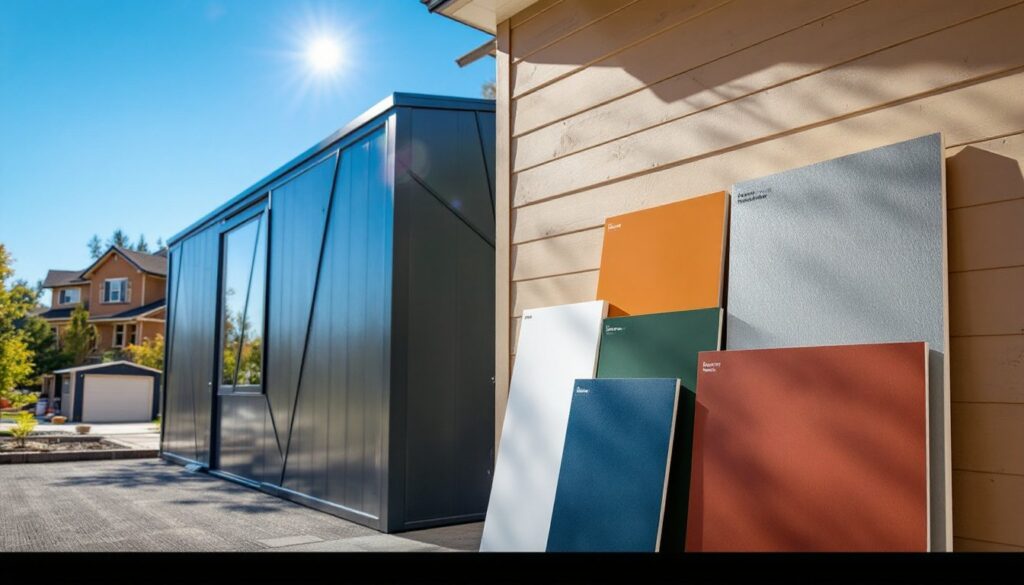
Before committing to a modern color combo on a metal building, request paint samples from the manufacturer and apply them to a test panel or the building itself. Sunlight direction, surrounding vegetation, and adjacent buildings affect how colors read. A color that looks great under the dealer’s indoor lights might surprise you in full afternoon sun.
Practical Considerations for Color Selection
Permits and Coatings – Check local zoning or HOA rules before painting. Some jurisdictions or neighborhoods restrict metal building colors or require approval before changes. More importantly, use a metal-roofing-rated paint or coating, not standard exterior house paint. Metal roofing requires primers and topcoats formulated for metal expansion and contraction. Products like polyurethane or polyester coatings have 15–20 year warranties: house paint does not.
Surface Prep is Non-Negotiable – This is where most DIY metal building paint jobs fail. Metal roofs and walls must be cleaned, typically with a pressure washer at 1500–2000 PSI to remove dirt, oxidation, and any loose coating. Let the surface dry completely (24–48 hours in dry conditions). Any existing coating should be inspected for adhesion: if paint is peeling, scrape it off or the new coat won’t stick. Primer designed for metal is essential, especially on bare steel. Skip primer and your topcoat will fail in 2–3 years.
Application Method – Metal roofing is typically painted with spray equipment (HVLP or airless sprayer) rather than rolled or brushed. Brushing leaves visible strokes: rolling is slow and wasteful on large, sloped roof surfaces. A professional contractor or rental-grade airless sprayer ($60–$100/day to rent) is the practical choice. One gallon of quality metal roofing paint covers 300–400 square feet depending on substrate and application method.
Climate and Maintenance – Lighter colors stay cooler and show dirt less: darker colors absorb more heat but look sleeker. In hot climates, light roof colors reduce cooling costs. In cold, snowy climates, dark roofs absorb sun and shed snow faster (though snow load on a metal roof is generally not a structural issue if the building was engineered correctly). Plan to power-wash or brush-clean the building annually, metal repaints less frequently than wood siding, but staying on top of cleaning extends the interval between major repaints.
Cost Estimation – A 2,400 square-foot metal building (40 × 60) typically costs $2,000–$4,500 to paint professionally with two colors, including surface prep, primer, and two topcoats. This varies by region, condition of existing coating, and whether the roof is pitched or flat. DIY painting saves labor but requires equipment rental and skill to avoid drips, pooling, or uneven coverage on vertical and sloped surfaces.
Architectural websites like Curbed regularly cover residential metal building trends, and design-focused publications offer insights into how two-tone color decisions affect property resale value and neighborhood perception. A well-executed two-tone scheme enhances property appeal: a poorly maintained or mismatched color combo detracts from it.
Conclusion
Two-tone metal building color schemes are a straightforward way to upgrade curb appeal and functionality without renovating structure or layout. Start with tested combinations like white-and-gray or black-and-tan, sample colors in full sunlight before committing, and invest in proper surface prep and metal-rated coatings. Whether you go classic, contemporary, or somewhere in between, the right two-tone choice transforms a utilitarian structure into an asset that complements your property for decades.