
A great home theater setup demands attention to sound quality, and most people focus on speakers, receivers, and acoustic panels. But here’s what often gets overlooked: the carpet beneath your feet plays a critical role in controlling reflections, dampening bass rumble, and creating that theater-like acoustic environment. The right home theater carpet absorbs unwanted sound, reduces echo, and transforms a room from sounding hollow to sounding professional. Whether you’re building a dedicated theater room or upgrading your media space, choosing the right carpet, one designed for acoustic performance, durability, and the wear and tear of frequent use, makes a real difference in how your setup sounds and feels.
Table of Contents
ToggleKey Takeaways
- Home theater carpet absorbs sound reflections and reduces bass rumble, making it essential for creating a professional acoustic environment beyond just speakers and receivers.
- Dense, high-pile home theater carpet in the 80 to 140 ounce range with acoustic underlayment controls mid and high frequencies better than standard residential carpet.
- Solution-dyed nylon or polypropylene fibers with stain-resistant treatments and high twist levels protect theater carpet from wear, spills, and fading in high-traffic spaces.
- Proper installation with a power stretcher and tackless strips prevents wrinkles and ensures the carpet stays tight, while professional installation typically delivers better long-term results than DIY attempts.
- Regular vacuuming with HEPA filters and low-moisture spot cleaning maintain acoustic performance and appearance without trapping moisture that degrades carpet underlayment.
Why Carpet Matters in Your Home Theater Setup
Many DIYers approach home theater as a pure electronics problem: pick good speakers, run cables cleanly, calibrate the receiver. But the room itself is an instrument, and carpeting is one of the most cost-effective tools for tuning it.
Hard flooring, wood, tile, laminate, reflects sound waves aggressively. Those reflections bounce off walls and create flutter echo, which muddies dialogue and makes the sound feel unfocused. Carpet absorbs mid and high frequencies, taming reflections and flattening the acoustic curve. Low-frequency bass still travels through the floor, but a dense, thick pile absorbs enough energy to reduce boomy resonances that plague basement theaters.
Beyond acoustics, carpet provides comfort during long movie nights and isolates the room from floor noise below (critical if your theater is upstairs or in a shared space). It also hides speaker cables and reduces foot traffic noise, so viewers aren’t distracted by creaking or footsteps. Properly installed theater carpet is an investment that improves both the listening experience and the practical livability of the space.
Key Features to Look for in Home Theater Carpets
Sound Absorption and Acoustic Control
Look for high-pile, dense carpet with a backing that includes acoustic properties. Standard residential carpet, typically 40 to 80 ounces per square yard, works for light use, but theater carpet should be in the 80 to 140 ounce range for real acoustic benefit. The thicker the pile and the denser the weave, the better it absorbs reflections.
Underlayment matters as much as the carpet itself. A rubber or foam-backed underlayment (½ inch thick) increases sound absorption and isolates the floor below. Some theater-specific options include crumb rubber or closed-cell foam that adds mass and damping.
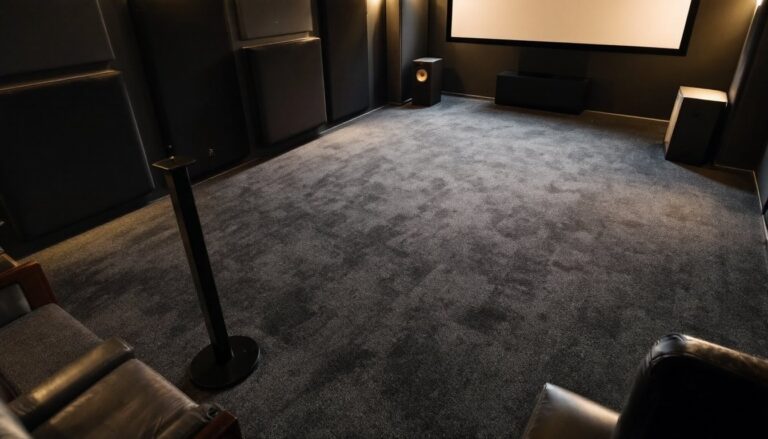
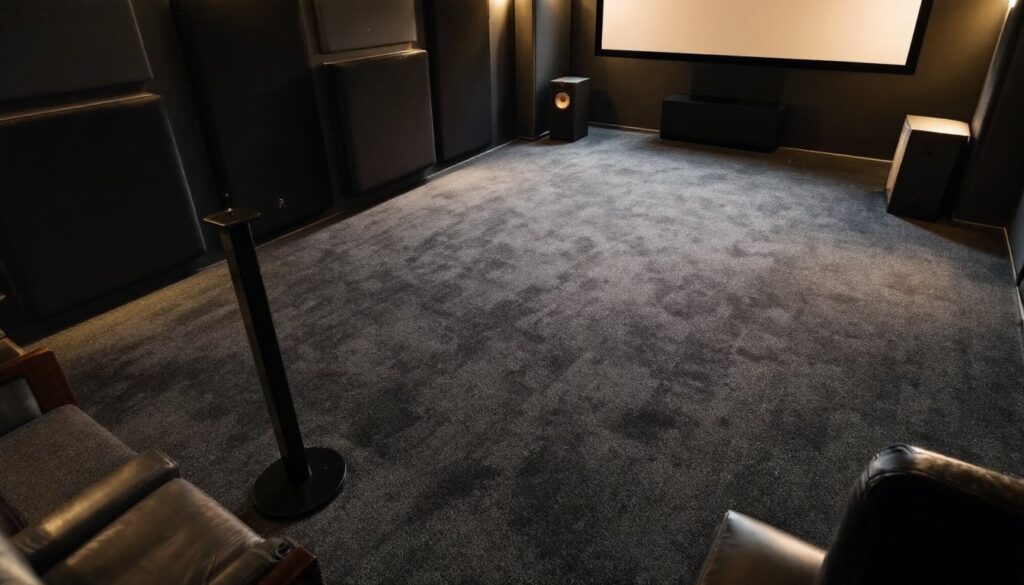
Choose neutral, dark colors, charcoal, dark gray, or black, to minimize light reflection, which keeps the room dark and focused on the screen. Lighter colors bounce light and can create subtle visual distractions.
Durability and Stain Resistance
Home theater rooms see foot traffic, spilled snacks, and constant use. The carpet must withstand abuse without matting or fraying.
Look for solution-dyed nylon or polypropylene fibers, which resist stains and fading better than natural fibers or piece-dyed options. Solution-dyed means the color is built into the fiber during manufacturing, so spills and UV exposure don’t bleach or fade the carpet as quickly.
Request a stain-resistant treatment at purchase or apply one afterward (brands like Scotchgard are standard). This creates a protective barrier that gives you time to blot spills before they set.
Check the twist level, higher twist fibers hold their shape longer under foot traffic. A twist level of 6 to 8 is standard: anything higher resists matting. Finally, ensure the backing system is moisture-resistant to prevent mildew if your theater room is below grade or in a humid climate.
Top Carpet Types for Home Theater Rooms
Plush Carpet is the most popular choice for home theaters. It has a dense, uniform pile that feels soft underfoot and absorbs sound evenly across frequencies. Plush doesn’t show footprints or wear patterns as visibly as loop pile, and it looks formal and clean, fitting for a dedicated entertainment space.
Saxony Carpet is a twisted-pile option with slightly more texture than plush. It resists traffic wear and hides dirt well, making it practical for family rooms that double as theaters. The texture adds visual interest without sacrificing acoustic performance.
Frieze Carpet features a highly twisted, curly pile that bounces back after foot traffic. It’s durable and hides footprints, but the curl can sometimes reflect sound differently than plush, so test samples in your room if acoustic precision is critical.
Berber or Loop Pile is less common in dedicated theaters because the looped fiber doesn’t absorb sound as effectively as cut pile. But, it’s extremely durable for high-traffic areas and resists staining. If you’re installing carpet in a media room that doubles as a playroom, Berber is a practical compromise.
For theater-specific applications, major retailers and specialty acoustic suppliers now offer products engineered for sound control. These often combine a specific pile height (typically 1 to 1.5 inches) with acoustic-rated underlayment and often include fire-rated backings for code compliance if your local building code requires it (check your local fire safety regulations, as requirements vary by jurisdiction). Costs range from $3 to $8 per square foot for quality theater carpet, plus $1 to $3 per square foot for underlayment, before professional installation.
Installation Tips and Maintenance Guidelines
Installation Prep
Measure twice: order once. Calculate square footage, then add 10% for waste and pattern matching. Let the carpet acclimate to the room for 24 to 48 hours before installation, this allows the fibers and backing to adjust to temperature and humidity and reduces shrinkage or expansion after install.
Prepare the subfloor by ensuring it’s clean, level, and dry. Fill any gaps or dips with self-leveling compound so the underlayment sits flush. Poor subfloor prep leads to lumps, wrinkles, and premature wear.
Underlayment Installation
Lay the underlayment first, running it wall-to-wall. Use a tackless strip around the perimeter (a standard practice for broadloom carpet). The tackless strip provides grip and prevents the carpet from shifting under foot traffic. If your room requires moisture barriers (common in basements), install a 6-mil polyethylene vapor barrier before the underlayment.
Carpet Installation
This is where hiring a professional usually pays off. Installing wall-to-wall carpet requires a power stretcher to eliminate wrinkles and ensure the carpet stays tight over years of use. A DIYer without the proper equipment will end up with a wavy, poorly fitted carpet that shows traffic wear faster.
If you’re cost-conscious, consider laying carpet tiles or runner-style carpet in the main seating area and leaving the edges as a border. This is easier to install yourself (peel-and-stick backing on many options), and you can replace damaged tiles without replacing the whole floor.
Maintenance
Vacuum high-traffic pathways weekly and the entire room every two weeks using a HEPA-filter vacuum to prevent dust from redistributing into the room. Avoid over-shampooing, which saturates fibers and can trap moisture underneath. Use low-moisture cleaning methods, spot-clean with a carpet stain remover and a damp cloth, then blot dry.
Rotate furniture annually to even out traffic patterns and prevent uneven matting. In home theater rooms, this is often less critical since seating is typically fixed, but moving the coffee table or accent pieces occasionally helps. Trim any loose fibers carefully rather than pulling them, pulling can cause runs.
Conclusion
Home theater carpet isn’t an afterthought, it’s a foundational piece of the acoustic design. High-pile, dense carpet with proper underlayment transforms the acoustic character of a room, reducing reflections and creating the controlled, focused sound environment that makes movies engaging. Combined with durable stain-resistant fibers and careful installation, the right carpet delivers both performance and practicality. Whether you’re building from scratch or upgrading an existing space, investing in quality theater-grade carpet pays dividends every time you press play. Resources like home technology buying guides and home automation reviews can help you build the complete theater experience around your new carpet foundation.