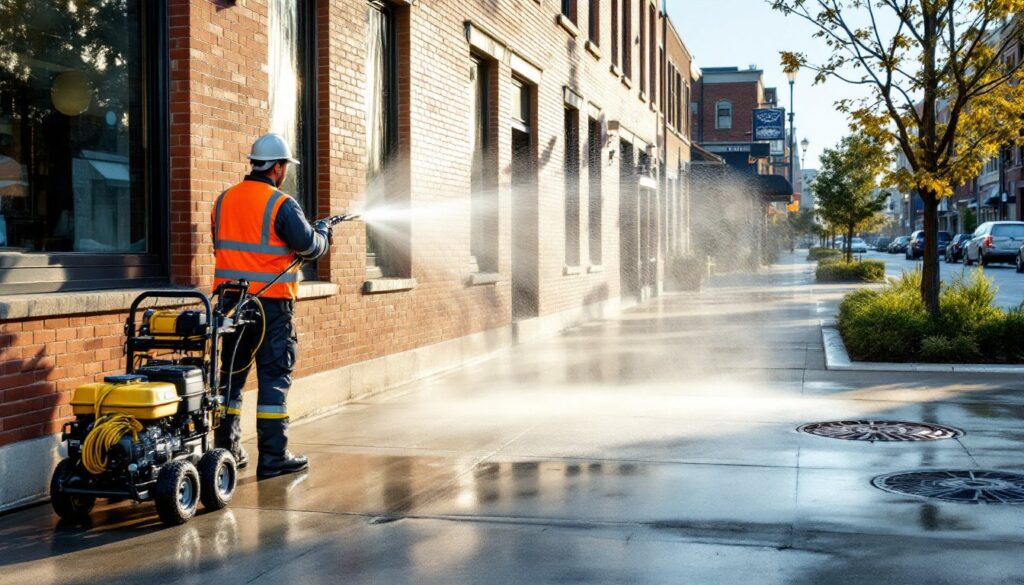

Commercial pressure washing isn’t just about aesthetics, it’s essential maintenance that protects your building’s value and extends surface life. Dirt, algae, mold, and weathered grime accumulate on facades, sidewalks, and parking areas, creating a neglected appearance that can hurt tenant retention and property perception. Unlike residential pressure washing, commercial work demands higher PSI equipment, careful planning around occupied spaces, and knowledge of which surfaces can handle aggressive cleaning without damage. This guide walks you through the process, equipment choices, and when to hire professionals so your property stays in top condition year-round.
Table of Contents
ToggleKey Takeaways
- Commercial pressure washing protects your building’s structural integrity and property value by removing mold, algae, and grime that accelerate surface deterioration.
- Use 3,500–4,000 PSI for concrete and driveways, but reduce to 2,500–3,000 PSI for brick and stone to prevent damage to mortar and grout.
- Proper technique requires applying detergent, allowing 10–15 minutes of dwell time, and washing from top to bottom so gravity assists runoff and prevents re-contamination.
- Always test your pressure setting on a hidden area first, wear ANSI-approved eye protection, and maintain at least 10 feet distance from bystanders during high-pressure work.
- Hire professional commercial pressure washing services for historic masonry, multi-story buildings, complex stains, and specialized treatments that DIY methods cannot handle.
- Regular commercial pressure washing improves tenant satisfaction, supports lease renewals, and costs far less than repairing damage caused by neglect.
Why Commercial Pressure Washing Matters for Your Building’s Curb Appeal
A dirty exterior is the first impression tenants and visitors get. Stained concrete, grimy brick, and algae-covered sidewalks signal poor maintenance, even if the interior is pristine. Commercial pressure washing removes years of buildup in hours, restoring the building’s original color and finish. Beyond appearance, regular cleaning prevents long-term damage: mold and algae growth weakens surfaces, salt spray accelerates corrosion, and dirt traps moisture that leads to deterioration. Property managers who maintain clean exteriors report better tenant satisfaction and easier lease renewals. You’re also protecting your asset, a well-maintained facade costs less to repair than one damaged by neglect.
Essential Equipment and Tools You’ll Need
Choosing the Right Pressure Level
Commercial pressure washers range from 2,500 to 4,000 PSI (pounds per square inch), depending on the surface. Concrete and driveways tolerate 3,500–4,000 PSI: brick and stone need 2,500–3,000 PSI to avoid pitting. Never assume higher PSI is better, too much pressure damages grout, mortar, and paint. GPM (gallons per minute) matters equally: higher GPM increases cleaning coverage speed without increasing pressure.
For a typical commercial building, you’ll need:
• Pressure washer unit (electric or gas: gas offers mobility and power for larger areas)
• Pressure hose (3/4-inch diameter, rated for your PSI)
• Nozzles (0°, 15°, 25°, 40° spray patterns for different tasks)
• Surface cleaner attachment (rotary head for flat surfaces like parking lots)
• Degreaser or detergent (biodegradable, pressure-washer-safe formula)
• Safety gear: non-slip footwear, eye protection, hearing protection (85+ dB), work gloves
• Ladder or access equipment (if reaching upper stories)
Rental companies stock commercial equipment for $75–150 per day. Buying a professional unit runs $3,000–8,000, justified only if you pressure wash regularly.
Step-by-Step Pressure Washing Process
1. Inspect and Prepare the Site
Walk the building and mark areas needing special attention: grease stains, rust, algae patches. Move vehicles, close windows, and notify tenants of the work schedule. Sweep loose debris off surfaces, pressure washing sediment already in place first reduces water use and residue.
2. Test on a Small, Hidden Area
Always test your pressure setting on a corner or unused section. This confirms your PSI and spray pattern won’t damage the surface. Wait for the test area to dry before proceeding, drying time shows how the surface will look after full cleaning.
3. Apply Detergent
Many commercial cleaners use a low-pressure cycle to apply biodegradable detergent or degreaser. Let it sit for 10–15 minutes to break down grime, don’t let it dry completely. This dwell time is where real cleaning happens: pressure alone doesn’t lift stubborn stains.
4. Pressure Wash from Top to Bottom
Start at the roof line or upper stories and work down. Gravity helps dirty water flow away, and you won’t re-contaminate cleaned areas. Use smooth, overlapping passes. For flat surfaces, a rotary surface cleaner attachment delivers even results and prevents streaking.
5. Rinse Thoroughly
Switch to a lower pressure (1,500–2,000 PSI) or a wider nozzle angle for rinsing. Remove all detergent residue, leftover cleaner attracts dirt faster. On brick or stone, rinse extra thoroughly since porous surfaces trap foam.
6. Allow Adequate Drying Time
Your building should air dry fully before heavy rain or foot traffic. Most surfaces dry within 24–48 hours depending on weather and humidity. Don’t seal or paint until completely dry.
Safety Precautions and Best Practices
Pressure washing injuries happen fast. A direct hit from 3,000+ PSI can break skin and cause serious lacerations. Always wear ANSI-approved eye protection and never aim the nozzle at people, pets, or windows. Keep bystanders at least 10 feet away when operating at high pressure.
Wear slip-resistant footwear, wet surfaces become slippery immediately. If using a ladder, secure it properly and have a spotter. Never pressure wash electrical equipment, light fixtures, or exposed wiring. Be aware of local stormwater regulations: some jurisdictions require containment or pre-filtration to prevent sediment from entering storm drains. Check your municipal codes before starting.
Be cautious with detergents and degreasers. Use only pressure-washer-safe, biodegradable formulas. Avoid harsh solvents on painted surfaces or near landscaping. Wear gloves and respiratory protection if spraying fine mists in enclosed areas. If cleaning near HVAC intake vents or landscaping, shield those areas with tarps.
When to Call a Professional Service
You can handle routine cleaning of concrete, asphalt, and vinyl siding yourself. Hire professionals for these scenarios:
• Historic or delicate masonry: Older brick and stone need expertise to avoid mortar erosion and damage.
• Multi-story buildings: Roof cleaning and upper-facade work require specialized equipment, training, and insurance.
• Stained or complex surfaces: Algae-covered wood, rust-stained brick, or graffiti removal often need chemical treatments beyond basic pressure washing.
• High-traffic areas: Parking garages and entry plazas may require permitting and code compliance for runoff.
• Lack of time or equipment access: Professional crews finish large projects in days, not weeks.
Professional pressure washing services run $500–3,000+ for a commercial building, depending on size and complexity. Reviews on HomeAdvisor and Angi help compare local contractors and costs. Many pros carry commercial liability insurance and understand building codes, saving you headaches. Request references, verify insurance, and get written quotes before hiring. Check that contractors use environmentally safe cleaning agents, increasingly important for regulatory compliance and tenant relations.
Conclusion
Commercial pressure washing is straightforward maintenance when you respect equipment power, prepare properly, and match PSI to your surfaces. Regular cleaning protects your building’s structural integrity, maintains tenant satisfaction, and preserves property value. Start with smaller, less visible areas to build confidence, and don’t hesitate to call pros for specialized tasks. A clean building is a well-managed building, and that translates directly to bottom-line results.