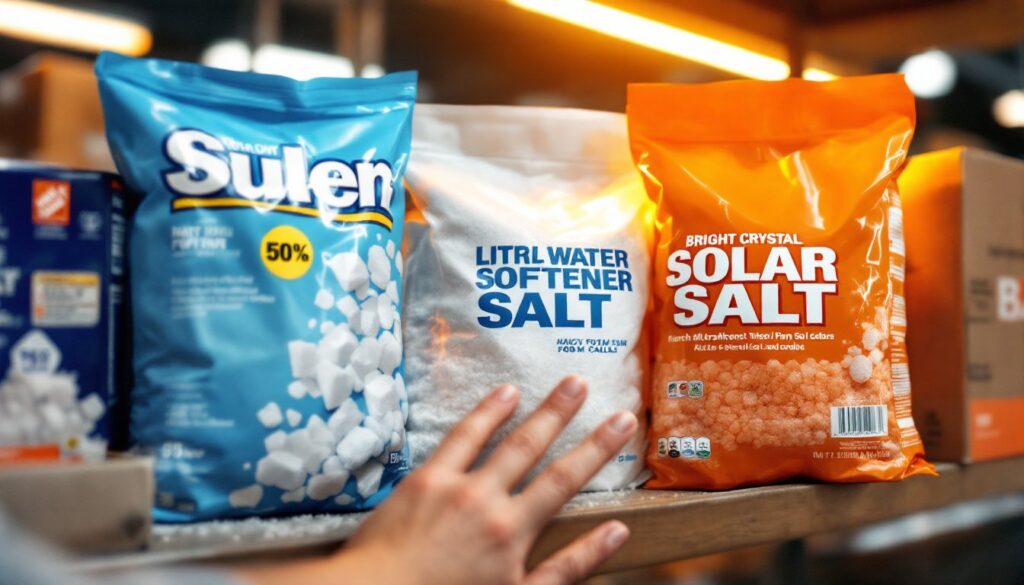

Hard water, filled with excess calcium and magnesium, can damage pipes, reduce soap effectiveness, and leave spots on dishes. A water softener solves this problem by exchanging those minerals for sodium ions, but the system only works if you’re using the right water softener salt. Home Depot stocks several types, and picking the wrong one wastes money or forces you to service your equipment more often. This guide walks you through what’s available, how to choose the best option for your softener, and how to store and maintain your supply so it works efficiently year-round.
Table of Contents
ToggleKey Takeaways
- Water softener salt is essential for regenerating resin beads in your system; using the wrong type or running out prevents proper water softening and can damage equipment.
- Home Depot offers three main types—rock salt (cheapest but sediment-prone), pellet salt (balanced performance and cost), and solar crystals (purest but most expensive)—with pellet salt recommended for most homeowners.
- Check your softener’s manual, measure your water hardness in grains per gallon (gpg), and verify the salt package is at least 99.5% NaCl purity before purchasing.
- Store water softener salt in a cool, dry place away from moisture, keep 3–6 inches of headspace in the brine tank, and monitor salt levels every 4–8 weeks to prevent bridging and system damage.
- Clean your brine tank annually (or every 2–3 years with pellet salt) to remove sediment buildup and avoid costly service calls that often exceed the cost of DIY maintenance.
Why Water Softener Salt Matters for Your Home
Your water softener’s job hinges entirely on salt. The system works by running hard water through resin beads charged with sodium ions, those beads trap the calcium and magnesium, trading them for sodium in return. Over time, those resin beads get saturated and need regeneration. That’s where salt comes in: it flushes through the tank, recharging the beads so they can soften water again.
Using the wrong salt type, or running out, means your softener can’t regenerate properly. You’ll notice spotty glassware, reduced water pressure, or buildup in pipes. Worse, some salt types contain insoluble materials that clog the brine tank and damage the system’s valve. Proper salt selection is cheap insurance against expensive repairs.
Home Depot carries options suited to different water hardness levels and softener models. Understanding those differences saves you frustration and keeps your system running smoothly.
Types of Water Softener Salt Available at Home Depot
Rock Salt vs. Pellet Salt vs. Crystals
Rock salt is the cheapest option and works well in most softeners. It’s mined from underground deposits and requires minimal processing, so it’s affordable and efficient for heavy hard-water areas. The downside: it contains insoluble materials, clay, sediment, and minerals, that settle as sediment in the brine tank. Over months or years, this sediment can clog the system and trigger service calls. Rock salt works best if your softener has a sediment filter or if you don’t mind occasional tank cleaning.
Pellet salt (also called tablet salt) is refined rock salt compressed into small pellets or tablets. This refinement removes most insoluble matter, so it dissolves nearly completely and leaves little to no residue. Pellets dissolve faster than rock salt and reduce sediment buildup in the brine tank. They cost more per pound than rock salt, but they’re gentler on equipment and often cost less in the long run because you’re not paying for service calls due to sediment blockage. Pellet salt is ideal if you want minimal maintenance.
Solar crystals are salt crystals produced by solar evaporation of brine. They’re extremely pure and nearly 100% salt with almost zero insoluble material. Crystals dissolve completely and leave the brine tank spotless. The trade-off is price, they’re the most expensive option at Home Depot. Solar crystals suit those with high water volume or softeners prone to sediment issues, but they’re overkill for many household situations.
Most homeowners start with pellet salt as the practical middle ground: better than rock salt’s sediment hassle, more affordable than solar crystals, and suitable for typical residential water hardness.
How to Select the Right Salt for Your Water Softener
Start by checking your softener’s manual or the manufacturer’s website. Most systems work with any of the three types, but some, especially older or compact models, perform best with pellets to avoid sediment buildup. If you’ve never serviced the unit, you might find the salt type listed on the equipment itself.
Next, assess your water hardness. Hardness is measured in grains per gallon (gpg) or parts per million (ppm). You can test your water with an inexpensive kit from Home Depot or request a free test from your local water utility. Very hard water (over 20 gpg) benefits from rock or pellet salt because of their higher sodium content and lower cost for high-volume regeneration. Moderate hardness (10–15 gpg) works fine with any type.
Consider your softener’s capacity and regeneration cycle. A smaller tank regenerating frequently can tolerate rock salt if cleaned annually. Larger tanks with frequent regeneration demand pellet salt to minimize sediment and maintenance. If your softener is near the end of its lifespan or has a history of sediment issues, upgrading to pellets prevents costly downtime.
Check the package label at Home Depot for salt purity rating. Look for at least 99.5% NaCl purity. Anything lower introduces too much sediment. Also verify the product works with your softener’s resin type, though modern softeners universally accept sodium chloride, confirming this detail takes 30 seconds and prevents guesswork.
Tips for Proper Storage and Maintenance
Store water softener salt in a cool, dry place, your garage, basement, or utility room works well. Keep it away from direct sunlight and moisture: salt absorbs humidity and hardens into useless clumps. A moisture barrier like a plastic storage bin or tarps keeps the salt workable. If you buy in bulk, store only what you’ll use in 6–12 months: salt doesn’t expire, but older stock can cake up if exposed to humidity.
When adding salt to the brine tank, don’t fill it completely. Leave 3–6 inches of headspace so the salt and water mixture can circulate during regeneration. Overfilling compacts the salt, reduces water flow, and forces the softener to work harder. Add salt when the tank level drops to about one-quarter full, not when it’s empty, an empty tank can damage the system.
Check the brine tank every 4–8 weeks, depending on water hardness and household size. A family of four with 15 gpg hardness might use 40–50 pounds monthly. Use a stick or dipstick to monitor levels: most tanks have a marked sight glass. If you notice a white crust or hard layer forming, break it up gently with a broom handle before adding fresh salt. This bridging occurs when salt crystallizes and traps air underneath, preventing proper brine formation.
Clean the brine tank annually or every 2–3 years if using rock salt. Family Handyman offers detailed instructions on flushing sediment safely. Drain the tank, remove visible debris, rinse with a hose, and refill. Homeowners using cost estimators often find that an annual DIY cleaning costs far less than a service call. If you’re uncomfortable working inside the tank, hire a professional, water softener service technicians handle this in under an hour.
Conclusion
Choosing the right water softener salt at Home Depot boils down to three factors: your water hardness, your softener’s maintenance tolerance, and your budget. Most homeowners find pellet salt delivers the best balance of performance and cost. Check your manual, inspect your brine tank quarterly, and don’t skip annual cleaning. With the right salt and simple upkeep, your softener will keep your water clean and your pipes protected for years.