
The top building and construction industry is changing fast. New technologies, environmental demands, and shifting client expectations drive this transformation. In 2025, construction companies face pressure to build smarter, faster, and greener than ever before.
This article covers the major trends reshaping how structures get designed, built, and operated. From sustainable materials to AI-powered tools, these developments affect everyone in the industry, contractors, architects, developers, and property owners alike.
Table of Contents
ToggleKey Takeaways
- Top building and construction companies are prioritizing sustainability with net-zero targets, low-carbon materials like cross-laminated timber, and energy-efficient design standards.
- Advanced technologies such as BIM, AI, and robotics are transforming project accuracy, reducing waste, and addressing labor shortages in the construction industry.
- Modular and prefabricated construction methods cut project timelines by 30-50% while improving quality control through factory-built processes.
- Smart buildings with IoT integration enable predictive maintenance, reducing maintenance costs by 10-40% and extending equipment lifespan.
- Top building and construction projects now embed IoT infrastructure and occupant experience features during the design phase to maximize property value and tenant satisfaction.
Sustainable and Green Building Practices
Sustainability now sits at the center of top building and construction decisions. Climate regulations, rising energy costs, and consumer preferences push companies toward greener methods.
Net-Zero and Low-Carbon Materials
Concrete and steel production generate massive carbon emissions. In response, manufacturers develop low-carbon alternatives. Cross-laminated timber (CLT) gains popularity for mid-rise buildings. Recycled steel and geopolymer concrete reduce the carbon footprint of new projects.
Many top building and construction firms now commit to net-zero targets. They track embodied carbon, the emissions created during material production and transport. This metric influences material selection from project start.
Energy-Efficient Design Standards
Passive house principles spread beyond residential projects. Commercial buildings incorporate better insulation, triple-glazed windows, and heat recovery systems. These features cut operational energy use by 60-90%.
Building codes tighten globally. The EU requires all new buildings to be nearly zero-energy by 2025. US cities like New York enforce strict emissions limits on large buildings. Top building and construction companies adapt their practices to meet these standards.
Water Conservation Systems
Water scarcity affects construction sites and finished buildings. Rainwater harvesting systems become standard in new developments. Greywater recycling reduces municipal water demand. Low-flow fixtures and smart irrigation cut consumption further.
These sustainable practices aren’t just ethical choices. They reduce operating costs, increase property values, and attract environmentally conscious tenants and buyers.
Advanced Construction Technologies
Technology transforms every stage of the top building and construction process. Digital tools improve accuracy, speed, and safety on job sites.
Building Information Modeling (BIM)
BIM moves beyond 3D modeling. Level 2 and Level 3 BIM enable real-time collaboration among architects, engineers, and contractors. Clash detection identifies problems before construction begins. This prevents costly on-site changes.
Top building and construction projects now integrate 4D BIM (adding time) and 5D BIM (adding cost). Project managers visualize construction sequences and track budgets dynamically. Some firms experiment with 6D BIM for facility management planning.
Artificial Intelligence Applications
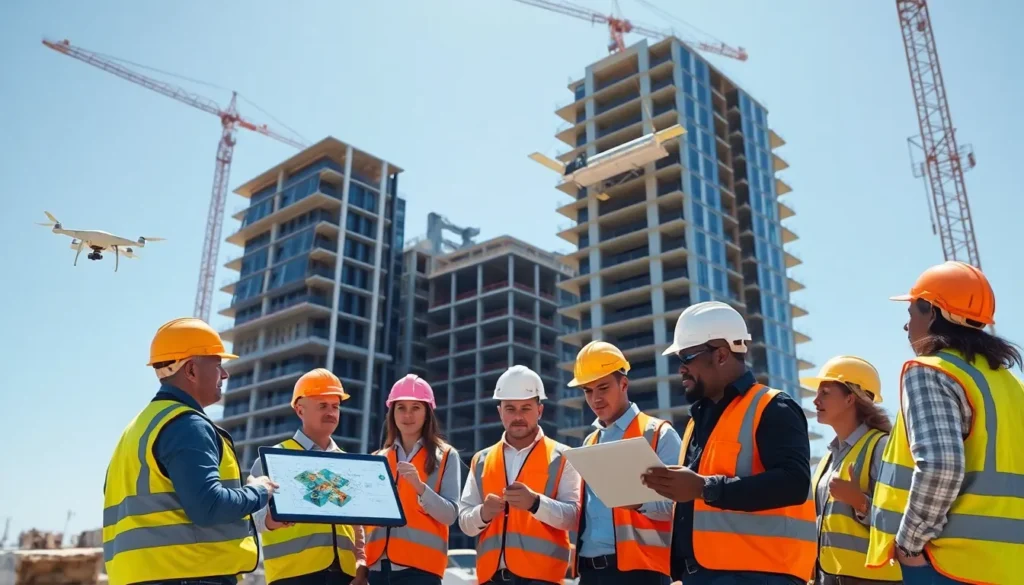
AI analyzes project data to predict delays and cost overruns. Machine learning algorithms optimize material quantities and reduce waste. Computer vision systems monitor site progress through drone footage and security cameras.
Generative design tools propose structural solutions humans might miss. They test thousands of configurations against specific parameters, load requirements, material constraints, aesthetic preferences. The results often outperform traditional designs.
Robotics and Automation
Robotic systems handle repetitive tasks. Bricklaying robots place blocks faster than human crews. Autonomous vehicles move materials across large sites. 3D printing creates building components, and sometimes entire structures.
These technologies address labor shortages plaguing the top building and construction sector. They also improve worker safety by handling dangerous tasks.
Modular and Prefabricated Construction
Factory-built construction gains market share rapidly. This approach offers compelling advantages over traditional methods.
Speed and Efficiency
Modular construction cuts project timelines by 30-50%. Factory work proceeds regardless of weather. Site preparation happens simultaneously with module fabrication. This parallel processing saves months on typical projects.
Top building and construction companies use prefabrication for hotels, apartments, hospitals, and schools. Marriott built a 26-story modular hotel in New York. Healthcare systems favor modular operating rooms and patient wings.
Quality Control Benefits
Factory environments enable consistent quality. Workers use specialized jigs and fixtures. Inspections happen at multiple production stages. Climate-controlled facilities prevent moisture damage during assembly.
Repeatability improves over time. Manufacturers refine processes based on performance data. Defect rates drop as teams gain experience with specific module designs.
Cost Considerations
Modular construction isn’t always cheaper upfront. Transportation costs add expense, especially for remote sites. Design changes become difficult once production starts.
But, compressed schedules reduce financing costs. Earlier occupancy generates revenue sooner. Reduced site disruption lowers indirect costs. These factors make modular methods competitive for many top building and construction projects.
Smart Buildings and IoT Integration
Buildings become intelligent. Sensors, networks, and software create responsive environments that optimize themselves.
Connected Building Systems
Internet of Things (IoT) devices monitor everything, temperature, humidity, occupancy, air quality, energy use. These sensors feed data to central management platforms. Building managers see real-time performance dashboards.
Top building and construction specifications now include IoT infrastructure. This means structured cabling, wireless access points, and edge computing nodes installed during construction rather than retrofitted later.
Predictive Maintenance
Smart systems detect equipment problems before failures occur. Vibration sensors identify bearing wear in HVAC units. Current monitoring spots motor degradation. This predictive approach reduces downtime and extends equipment life.
Building owners save 10-40% on maintenance costs with predictive systems. They avoid emergency repairs and schedule work during convenient periods.
Occupant Experience Features
Smart buildings respond to user needs. Mobile apps let occupants control lighting and temperature in their spaces. Wayfinding systems guide visitors. Desk booking platforms optimize space utilization.
These features improve tenant satisfaction and justify premium rents. They also generate valuable data about space usage patterns. Top building and construction projects increasingly incorporate these systems from the design phase.